This summer’s Be the Artist series asks the question: “Who Made That?”
Who Created Grotesques and Gargoyles?
They adorn cathedrals, libraries, and gothic castles. They are seen in horror films, fantasies, and during the Halloween season. They have been part of storytelling and legends for centuries and are always eye-catching. They are gargoyles!
Gargoyles are actually functional waterspouts on buildings with the water often pouring out of their gaping mouths, while grotesques are simply decorative exaggerated creatures. However, the term “gargoyle” has become a sort of catch-all for grotesques and gargoyles, and many people simply refer to both as gargoyles.
The word “gargoyle,” according to the Morris Oxford site, is “onomatopoetic” as it “conjures up the sound of gargling or gurgling and is probably derived from Norman French.”
Yet, who created them? Well, the “when” in this case is as significant as the “who,” because the use of gargoyles and grotesques dates back centuries, often given their horrific looks to guard churches and scare away evil spirits, according to some lore. Sometimes it is also said they are built to represent the look of sin or evil.
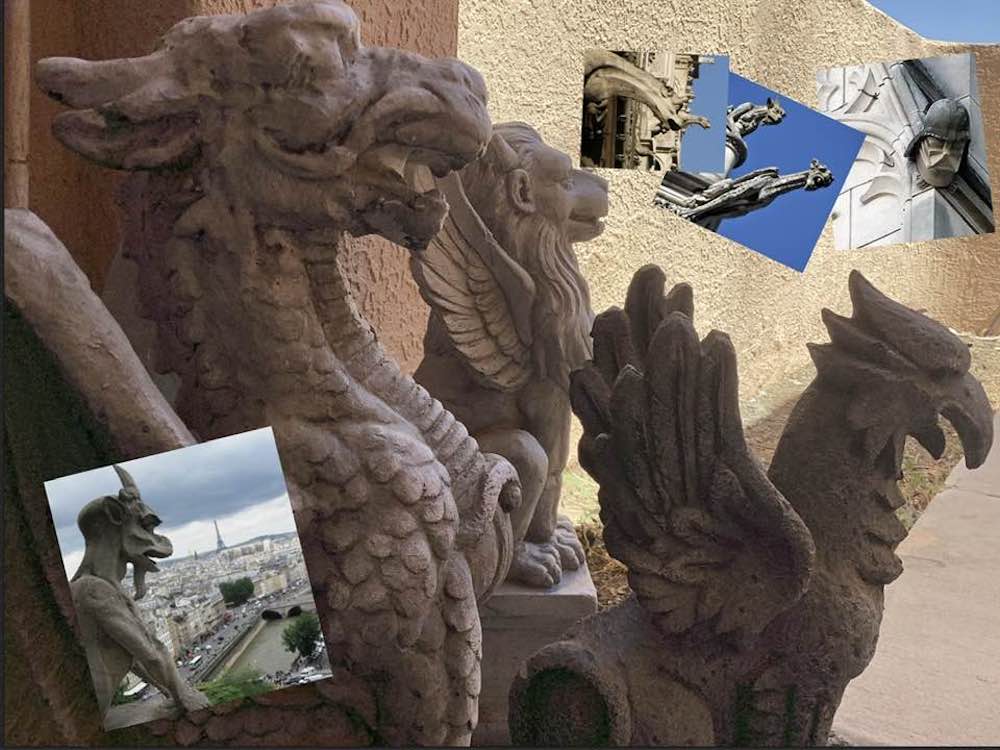
They have been around for thousands of years, with some of the earliest examples dating back to Greek temples, but many of the famous designs we associate with medieval Europe. Some famous French ones, like the Notre Dame gargoyles and those on Laon Cathedral, may be traced back to the 1200s, according to a 19th-century French architect named Eugene Viollet-le-Duc, who did much work on the restoration of Notre Dame. Some in other countries date back even earlier.
There are gargoyles and grotesque-like creatures adorning buildings around the world today, with notables throughout Europe, North and South America, and Asia.
Gargoyles have taken the shape of many forms, often from screaming and mocking human faces. There are angels and demons. There are dragons, lions, and other animals. Many can be frightening, and others simply beautiful. Many gargoyles are more pop-culture-oriented, and some buildings have taken on the appearance of everything from astronauts to family pets to famous faces and storybook favorites.
A tourist page for Gloucestershire County has a great rundown of different types of designs, but if you want to see the most gargoyles per square mile (according to the quiz site Brainly), head towards Paris, France near Notre Dame.
Where would architecture be without the grotesque and the gargoyle? Some may be deemed useless or ugly, others the result of superstition, but thankfully, not everyone shared the opinion of a 9th-century cleric, Bernard of Clairvaux:
“Of what use to the brothers reading piously are these ridiculous monstrosities, these prodigies of deformed beauty,” he said. “Almighty God! If we were not ashamed of these unclean things we should at least regret what we have spent on them.”
Create Your Guardian
When people hear the word “gargoyle” they often have a particular image of the Notre Dame-style grotesque in mind, but there are gargoyles and grotesques shaped like all kinds of creatures.
The National Cathedral in Washington, D.C. has a Darth Vader-shaped gargoyle, and Paisley Abbey in Scotland has a Xenomorph created during refurbishment in the 1990s. If it’s looking over your home or room as if it is guarding, watching, and protecting, it can take after anything you want.
For this project, we are going to turn an old toy or discount store finds into a new gargoyle.
First, find a plain, no-frills plastic, rubber, or even ceramic figure of a random animal. I recommend unbreakable toys for younger gargoyle makers. No plush or fuzzy items.
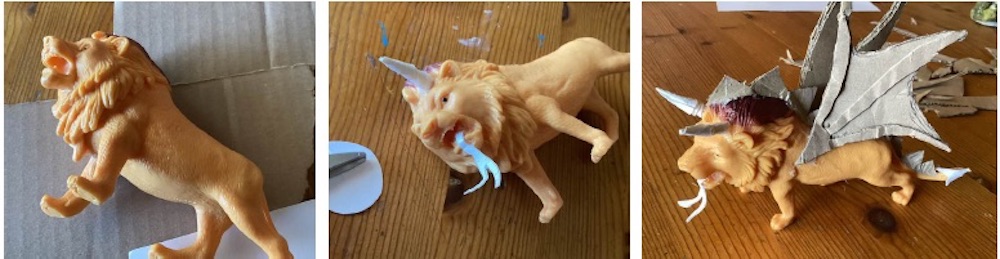
Although there are gargoyles with human-like faces, this will not work with more “humanoid” shaped things, like action figures or dolls. Animal shapes work best, particularly those in a sitting position. Lions, dogs, cats, bears, or any creature along that line could be a gargoyle.
Once you find your creature, you will need some grey or stone textured acrylic or spray paint, some cardboard and card stock paper, and a glue gun or strong glue.
Look at some favorite gargoyle designs and think about what makes them extreme. Some look closer to plain animals, but many have big wings, horns, elongated tongues, or other supernatural appendages. Cut some cool, pointy wings (of your own design), and make some little cone-shaped horns. The rest is up to you. Do you want a beard, tongue, spikes, or other items on the back?
Glue all these things in place until the gargoyle is shaped how you want.
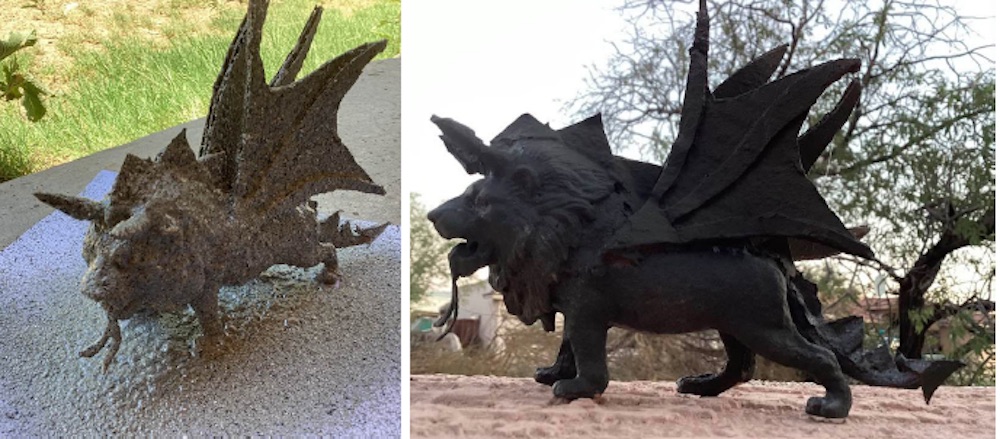
Finally, turn it into stone! Use grey or brown paint to cover the entire thing with a solid color. There are some paint colors in both brush and spray paint designs that have a stone-like pattern or texture to take it to a more authentic level.
Now, you have a little work of art, a gargoyle, to sit on your shelf, desk, refrigerator, or windowsill.
If you want to make it spookier, you can add some red paint to craft rhinestones to the eyes, but gargoyles don’t have to always be “Halloween-y.”
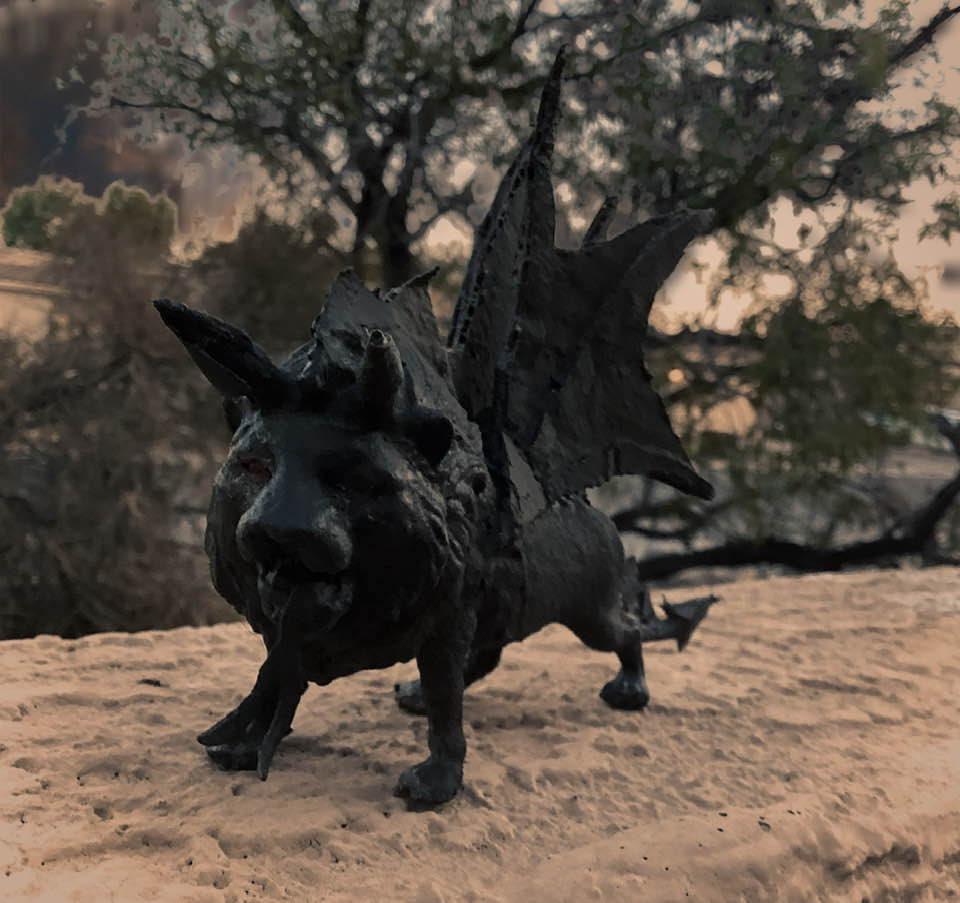
Gargoyles may seem frightening, but that’s their job, after all.
Remember Goliath from the Disney series, Gargoyles? He reminded us of their job, in a more superhero way:
“We are defenders of the night,” he said. “We are gargoyles.”