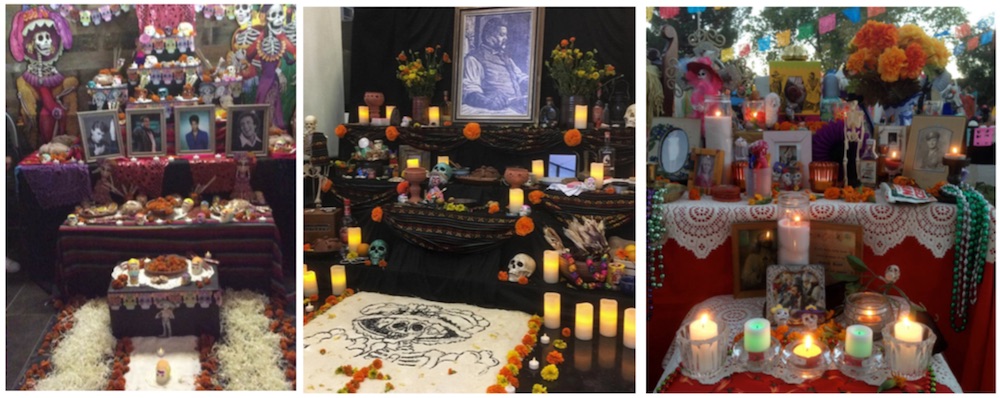
It’s Dia de los Muertos (Day of the Dead) on November 2, and, when you live in the American Southwest, beautiful ofrendas (altars) are everywhere.
They are in front of people’s homes, part of Halloween and fall displays, in the halls of schools and libraries, courtyards of public buildings and churches, and even in restaurants and theatres.
This day of celebrating and remembering those who have left this world is filled with color and festivity, and there are many similar celebrations all around the world.
Mexico’s celebration is a beautiful derivative of Western Christian culture’s All Souls Day on November 2, and Ireland brings us the Halloween fun that comes from Samhain. In Japan, there’s Obon (Festival of Souls) in August, and the harvest and ancestral festival of Chuseok is each fall in South Korea. There is Pitri Paksha where Hinduism is prominent and the Hungry Ghost Month in China. Bolivia, Philippines, Nepal, Cambodia, Ukraine, and many other countries all have their own celebrations and observances for remembering their ancestors.
With the many prominent references to Dia de los Muertos in pop culture, the customs of Mexico’s colorful celebration, including the altars, are becoming more familiar.
In my border hometown, not only are ofrendas something you see with families but they are a good way for students and community groups to teach everyone about this cultural festival. Altars aren’t just built for family, either. Some people want to remember historical figures, artists, musicians, or athletes who meant something special to them.
It is very easy to build an ofrenda, but there is more to it than just marigolds and sugar skulls (calaveras). They are a wonderful place to start, but there is a reason behind certain items you see.
For example, sugar skulls not only represent death but serve as a reminder that life is sweet. Marigolds are called “flor de muerto” because their vivid color and scent are meant to help lead the dead back home.
Here are some of the other items some ofrendas might have, in case you want to learn a little more about creating one for those you love and miss:
A photo of the deceased from any time in their life is fine, but often one that shows them in their happiest times or their prime is chosen. These are the visual reminders of those who are no longer here.
Some altars include items representing earth (like bread, produce, or flowers), water (water, of course), fire with remembrance candles, and wind, which the elaborate paper cuts of papel picado help to show.
Showing off the air and wind is far from these paper flags’ only purpose. Their holes allow the spirits to pass through and visit, while the tissue paper shows how fragile life can be.
Bread of the Dead is not only common for ofrendas but also for us living people who want to be part of the feast. The bread is on altars because the dead will be hungry when they return, often included alongside some of their personal favorite food and drinks. This is also why you see water and sometimes small shots of tequila. No, you don’t want these souls to be too tempted or corrupted, so some altars will include a small cross from salt. This helps the soul be purified.
In addition to the traditional items, ofrendas are often personalized to represent how unique each individual was. Sometimes you will see items that represent their occupation, their talents, or their hobbies. That just adds to the beauty of the individual. I have seen everything from a needle and thread to video game controllers on modern altars. There is no limit.
Big ofrendas can be set up on more than one level. These can represent the underworld, earth, and heavens. If you are just doing a small ofrenda, you don’t have to do that.
While many different cultures realize the importance of remembering our ancestors, the ofrendas of Dia de Los Muertos are certainly one of the most colorful.
Now, when students or community groups build their own, they can have a better understanding of the meaning behind each item and how it helps to remember and bring home our loved ones of the past.
This post was last modified on November 1, 2024 11:17 am
The fight between winter and the onset of spring is something we know well in…
Out today is the newest Mouse Guard book, 'Mouse Guard: Dawn of the Black Axe'—and…
If you like some extra squares in your cubes, check out the new Rubik's x…
Like many others, I jumped directly into my Apple Music Replay this year filled with…
It's time to stuff the stockings that were hung with care with our must-have stocking…