Sometimes it’s hard to believe that Magic: The Gathering, that most ubiquitous of collectible card games, launched in game stores all the way back on August 5th, 1993. Here we are, 30 years later, with the game still going strong.
Back in the ’90s, I belonged to a group of friends that would play Magic. A lot. We’d all make frequent trips to the local game store, grabbing booster packs and trying to figure out cool decks to build and play against each other.
But much like a band breaking up, our little group drifted apart. Rather than look for a new group to play with, and having no interest in the tournament scene, I hung up my hat and sold my collection on this new and exciting online auction site that had recently launched called “eBay.” And that was the end of that.
Cut to 2023. For several months, my friend Chris had been bugging me to pick up the game again, so we could play Magic: The Gathering together. As a busy game reviewer, I told him the only way I’d start up MTG again would be if Wizards of the Coast sent me some cards.
I bet you’ll never guess what ended up happening…
Magic: The Gathering is the first, and by extension the most enduring, collectible card game around. Created by Richard Garfield in 1993, MTG is still going strong, with regular new set releases and play ranging from casual to professional Esports. It is published by Wizards of the Coast, which also publishes Dungeons & Dragons.
While generally a 2-player game, Magic: The Gathering can also be played in a free-for-all mode with up to 5 players, ages 13+. You play as wizards, casting spells and summoning monsters in an attempt to defeat your opponents.
Back when I started playing Magic in the ’90s, things were pretty simple. You’d buy a deck and some booster packs, mix them together, and start playing. Once you had enough cards in your collection, you’d start building your own decks: adding and removing different cards to make a deck that played in a certain way, usually revolving around multiples of a few select cards.
These days, there are a lot more options available to players. There are somewhere around 20 different formats for play currently in Magic: The Gathering. I’m not aiming to cover all of them in this article. Instead, I’m going to go over a few of the more popular formats. And for both someone like me who’s returning to the game after a long absence, or for someone entirely new to Magic: The Gathering, I’m going to discuss what I consider to be some of the best ways to get started in the game.
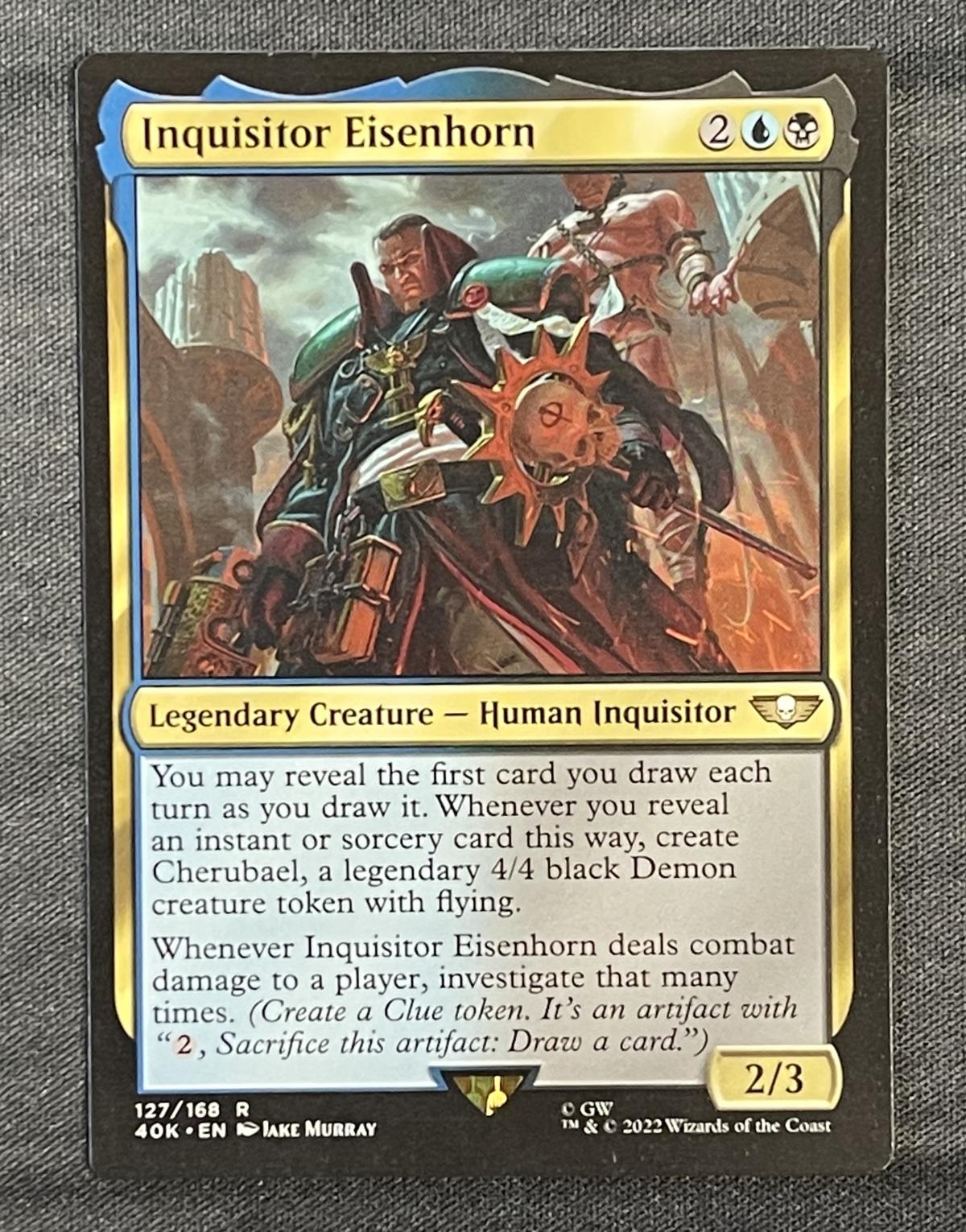
Magic: The Gathering is one of those games that is pretty easy to pick up the basics, but can become pretty complex depending on individual cards, such as this one below:
If you’ve never played a collectible card game before, don’t be scared! You wouldn’t, or at least shouldn’t, be starting off with anything that complex. Here are the basics on how to play a standard 2-player game of Magic: The Gathering:
Each player will start with their own deck, known as your library, which contains between 60-100 cards. Each player starts with 20 life, and the goal is to reduce your opponent to 0 life.
Players shuffle their decks and then decide who will go first.
Players draw 7 cards as their starting hand. If you don’t like your starting hand, you may take a mulligan, shuffle those cards back into your deck, and draw a new hand. However, each time you mulligan, you remove one card from your hand and place it at the bottom of your library.
Each player’s turn will proceed through the following phases:
Note: Unless the card says otherwise, a creature that has just been cast has “summoning sickness” and may not be used to attack that turn.
And that’s the basics of gameplay for Magic: The Gathering! The winner is the first to reduce their opponent’s life to zero.
So now that we’ve gone over the basics of how the game is played, what’s a good jumping-off point for both the new and returning players?
Whether you’re looking for a refresher course on how to play or want to try out the game for the first time, I recommend that your first stop is with the free-to-play Magic: The Gathering Arena. This is the official Wizards of the Coast gameplay app, available for PC, Mac, iOS, and Android. In addition to a great multi-part tutorial, there are a lot of resources for learning and playing the game. You can play against an AI opponent or other players, and you will unlock and earn cards and other bonuses as you play.
As with other free-to-play games, you may also choose to purchase card packs and cosmetics. But everything you actually need to play can be unlocked for free via gameplay.
Head over to the Arena website to download Magic: The Gathering Arena for the platform of your choice.
While Magic: The Gathering Arena is a fantastic way to learn and explore Magic, card games are meant to be played with other people. And sometimes the best way to learn is to grab some cards and a friend and just start playing.
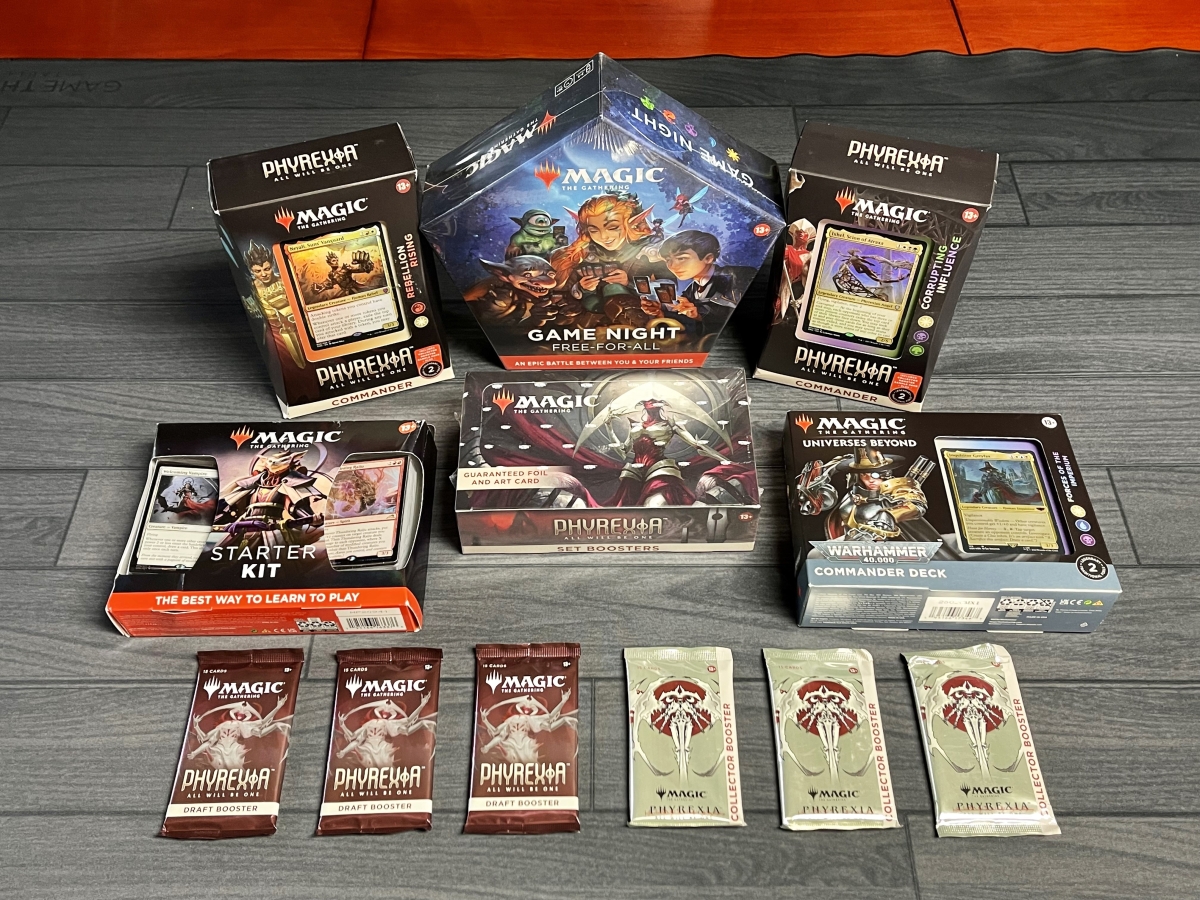
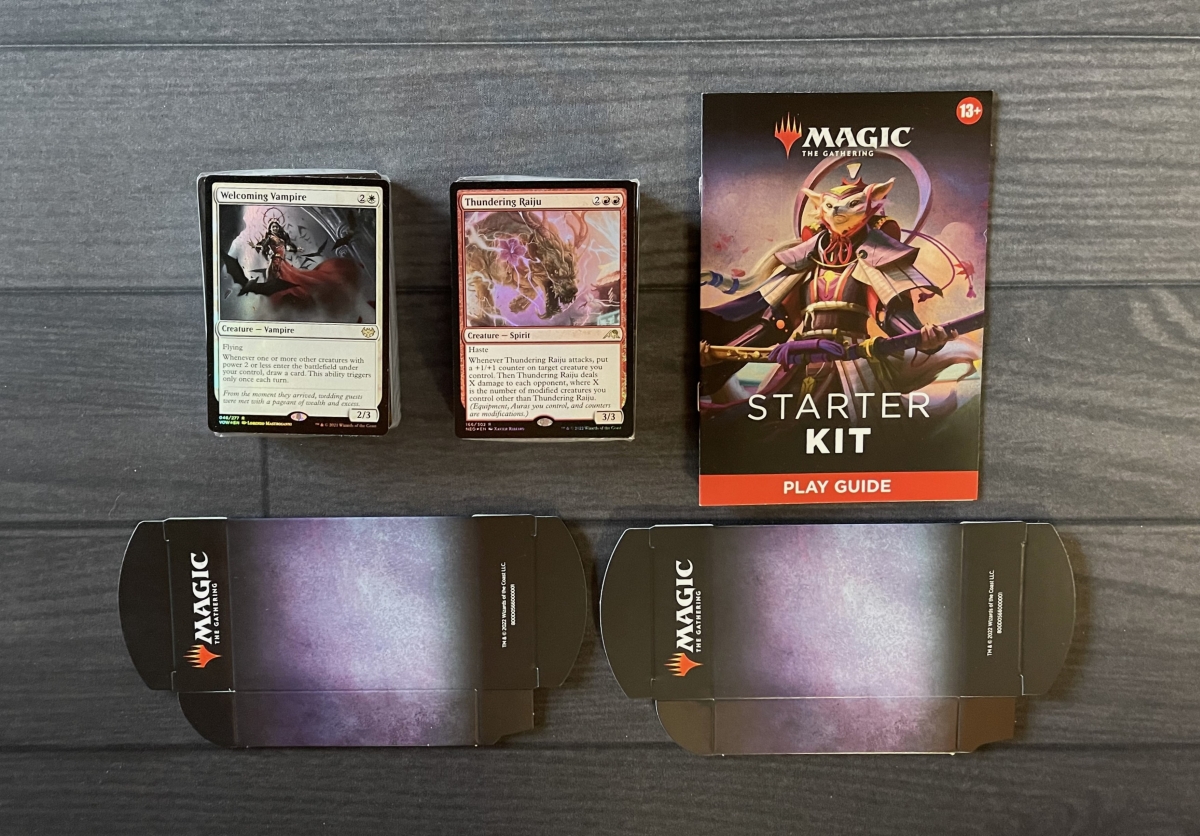
The Magic: The Gathering 2022 Starter Kit contains two premade starter decks, a rulebook, and even boxes to hold the two decks. It’s very affordably priced, too, with an MSRP of $14.99 but available for just a little over $10 at Amazon.
The complexity level for the two starter decks is fairly low, so this is definitely a good jumping-off point for beginners, especially considering the low price point. And as an added bonus, you get a digital code to redeem in Magic: The Gathering Arena, so that you can add both decks for use with your online profile.
If you’re just starting out with Magic: The Gathering or collectible card games in general, then I’d suggest starting with Arena or the starter kit. But if you know for sure you want to play Magic, then I’d definitely recommend taking a look at the Magic: The Gathering Game Night: Free-for-All 2022.
This set has everything you need to get started playing with up to 5 people. There are 5 different decks, each themed around a different color of mana.
Each of the decks includes a card giving you a quick rundown of its play style. The included play guide and rule book goes into much more detail and even include lists of all the cards in each deck.
The set also includes five 20-sided dice, each matching the colors for the decks. You can use these to track your life during the game. There are also twenty +1/+1 tokens included, as several creatures and spells will allow you to produce these.
As an additional bonus to those who are interested in the collectible aspect of Magic: The Gathering, each of the 5 decks in the Game Night set has a card that is unique to this set.
Magic: The Gathering Game Night: Free-for-All 2022 is available at your local game store, or at Amazon for approximately $48. While that’s a bit of a step up over the 2-deck starter price, it’s an excellent all-inclusive set that is a great start to playing Magic: The Gathering. There’s a lot of variety in the 5 decks, the tokens and life counters are very useful, and you can even store the decks right in the box.
As I mentioned before, there are several different formats for playing Magic: The Gathering. If you’re just starting out with the game, you don’t need to worry about most of these. But I still felt it was worth mentioning some of the more popular formats, so you know some of the different ways that you can play, both casually and competitively.
Most Magic: The Gathering players don’t just use premade decks. They will instead pick and choose cards from their collection to build their own decks, often based on a particular playstyle, or to take advantage of certain stronger cards that they own.
In general, you will build a deck with a minimum of 60 cards, and with no more than 4 copies of any named cards. You will also have a “sideboard” with a maximum of 15 cards in them, that you can swap in and out of your deck between matches to try and adjust to your opponent.
And one bit of advice for new players here: try not to build too big of a deck. While there is no upper size limit, if you have too many cards in your deck, you may find it difficult to draw the ones that you actually need.
This is a newer format and something of a variation on how people used to play Magic by simply grabbing a deck box and two booster packs and shuffling them together to play against an opponent who was doing the same.
With Jumpstart, each player picks up two 20-card “Jumpstart” booster packs from the same set and shuffles them together to create a themed deck. You then play against each other with those decks.
This is a great format if you’re not quite ready for constructing your own decks, but want to try out something new. As the cards you get are random, you’ll also be on equal footing with your opponent.
Jumpstart booster packs cost about $5 each at your local game store, or you can get entire booster boxes. An 18-pack Jumpstart booster box for the most recent release, Phyrexia — All Will Be One can be picked up on Amazon for $79 as of this writing.
Even more random than playing Jumpstart, this format has each player grabbing 6 sealed 15-card booster packs, opening them, and shuffling them together to form a deck. You then play with those newly-created decks.
Until recently in the game, there was only one kind of booster pack available. Now, there are both Draft boosters and Set boosters. Draft boosters are the ones specifically designed for the “Limited” format, which includes both the Sealed Deck and another way to play, Booster Draft. Set boosters are a lot more random, and are more designed for card collectors and players who construct their decks.
Here’s a look at the two different boosters from the latest release, Phyrexia — All Will Be One:
One of the most popular of the current formats is Commander. Players build or buy a deck centered around a commander, which is a legendary creature card. The deck consists of 99 additional cards, all only using the colors of the mana used to summon that commander. You can also have a maximum of 1 copy of any named card.
In this format, players will often have 4-player free-for-alls. Wizards of the Coast sells several premade Commander decks, such as this Warhammer 40,000-themed Forces of the Imperium deck.
There’s a reason that Magic: The Gathering will turn 30 years old this August; it’s a great game. Richard Garfield designed a system that has been oft-imitated and iterated upon by other collectible card games.
Magic: The Gathering long ago joined the ranks of the “easy to learn, hard to master” games. As I’ve illustrated, Wizards of the Coast provides multiple easy entries into playing. Within minutes of cracking open the starter kit or logging into the tutorial on Magic: The Gathering Arena, you’ll have a grasp of the fundamentals of gameplay.
Besides having a rock-solid backbone of a ruleset, Magic cards feature phenomenal artwork from a variety of artists and different styles. Much of the best artwork is often reproduced onto neoprene playmats, which are a terrific optional accessory for use with MTG or any other card game.
The collectible part of Magic: The Gathering being a collectible card game doesn’t appeal to everyone, but for those that enjoy it, there are some great rare cards to chase in every release. There are four different levels of rarity in MTG cards, ranging from common all the way up to mythic rare. Some of these cards are even special foil-printed ones, which up the value even more. There’s definitely excitement in opening up a booster pack and finding a cool rare card.
Wizards of the Coast is also very good at supporting the game with new releases, such as Phyrexia — All Will Be One, which hit stores on February 10th. These releases even have an ongoing storyline, which you can follow on the Magic: The Gathering website. In addition, they have started releasing “Universes Beyond” sets, like the Warhammer 40,000 Commander Decks. Later this year, we will see a big crossover as both Universes Beyond — The Lord of the Rings: Tales of Middle-Earth and Universes Beyond — Doctor Who Commander Decks make their way onto store shelves.
But the biggest reason you should play Magic: The Gathering? It’s a fun game. It’s flexible, so you can play it in whatever way or ways that appeal to you. It’s quick and easy to take a deck and throw down with another player across the table.
So if you’re ready to try out the game, or like me, you’re just getting back into it, I’ve provided you with the tools you need to get (re)started with Magic: The Gathering. Hope you have a great time!
Magic: The Gathering can be played for free digitally with Magic: The Gathering Arena, and you can purchase cards at your local game store or on the Magic: The Gathering Store on Amazon.
Click here to see all our tabletop game reviews.
Disclosure: GeekDad received a copy of this game for review purposes. As an Amazon affiliate, I may earn a small commission on qualified purchases.
Click through to read all of “The Lapsed ‘MTG’ Player: Getting (Re)Started With ‘Magic: The Gathering’” at GeekDad.If you value content from GeekDad, please support us via Patreon or use this link to shop at Amazon. Thanks!
The fight between winter and the onset of spring is something we know well in…
Out today is the newest Mouse Guard book, 'Mouse Guard: Dawn of the Black Axe'—and…
If you like some extra squares in your cubes, check out the new Rubik's x…
Like many others, I jumped directly into my Apple Music Replay this year filled with…
It's time to stuff the stockings that were hung with care with our must-have stocking…