

The fight between winter and the onset of spring is something we know well in Maine, as I sit here facing down another winter storm that may keep my kids at home, I find myself thinking back to one of my favorite books of 2025, The Winter Goddess by Megan Barnard.
Cailleach, goddess of winter, scorns the mortals that she walks amongst until one day she goes too far and her winter kills thousands. Her mother Danu, queen of the gods, curses her in punishment. She must live and die perpetually amongst the mortals she disdains until she is able to appreciate the value of human life. Stripped of her powers, she dies very quickly again and again, until she learns how to live. Determined to live alone, she finds that she cannot help but be drawn to the people she once hated. Opening herself up to humanity piece by piece, she learns things she never knew as an immortal.
This is a stunningly beautiful rendition of Irish mythology and a captivating exploration of the human condition. Of what it is to love and to lose, to love and to grieve. I couldn’t not be drawn back to Tennyson’s poem with every new life that Cailleach lives.
I hold it true, whate’er befall;
I feel it, when I sorrow most;
‘Tis better to have loved and lost
Than never to have loved at all.
(In Memoriam A. H. H., 27.13-17) – Alfred, Lord Tennyson
Tennyson penned this poem after the death of a close friend in 1833, a loss he believed he could not recover from. The poem in full describes three years of processing this grief. Ultimately he found hope in the idea that the knowledge of the love would ultimately surpass the grief of it.
These words have brought condolence to monarchs, poets, and everyday people for almost two centuries now, and are brought to life vividly in the journey that Cailleach takes over the course of her many lives. Joining her on her rollercoaster of emotion, I felt myself vacillating wildly from perspective to perspective. Wanting to shut myself away in her hut, shunning all contact to protect my heart, and then wanting to run down the hill into the arms of a child or lover.
Last year we spent a day in the Emergency Room for my husband, and each time I think of how close we came to losing him, I throw up a little. I have friends who have lost children and twenty years later still feel the grief keenly. Whether or not the love Cailleach finds in her lives will be great enough to assuage the losses she faces is too much of a spoiler to reflect on, but the journey is not what she expected, and the ending is not what I expected.
So many things about this narrative captivated me all the way through. The different ways in which Cailleach dies, and what she learns or doesn’t learn from each death. I have spent much time imagining myself in survival situations, and I never live, so I found it very close to my own skin every time she died. I adored the lyrical and yet down to earth exploration of the very nature of the gods themselves. And as Cailleach the god learns new things in each life, Barnard delicately weaves this discovery into the tapestry of a mortal life, fragile and different each time, much like the delicate snowflakes that Cailleach loves.
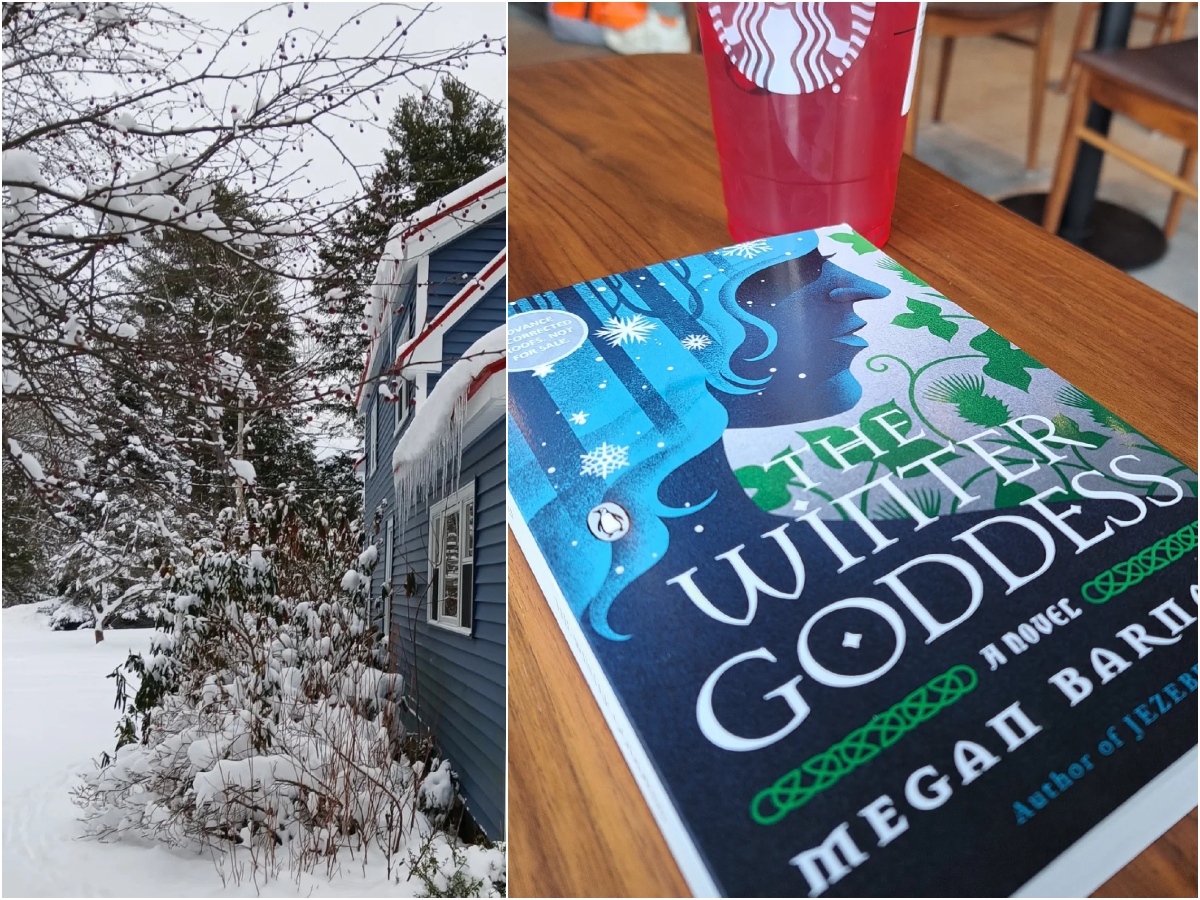
Every time it has snowed since I read this book, which is many times, I find myself back in the village with Cailleach. This world that Barnard has created is haunting, not just because of it’s ethereal subjects, but because of the way the ethereal touches the earth.
One final note of praise, I adore the description of the author in her author biography:
“Megan Barnard is the author of novels born from an obsession with ancient myths, powerful women, and forgotten voices”
Oh that someone would describe me as such some day.
GeekMom received a copy of this book for review purposes.


