

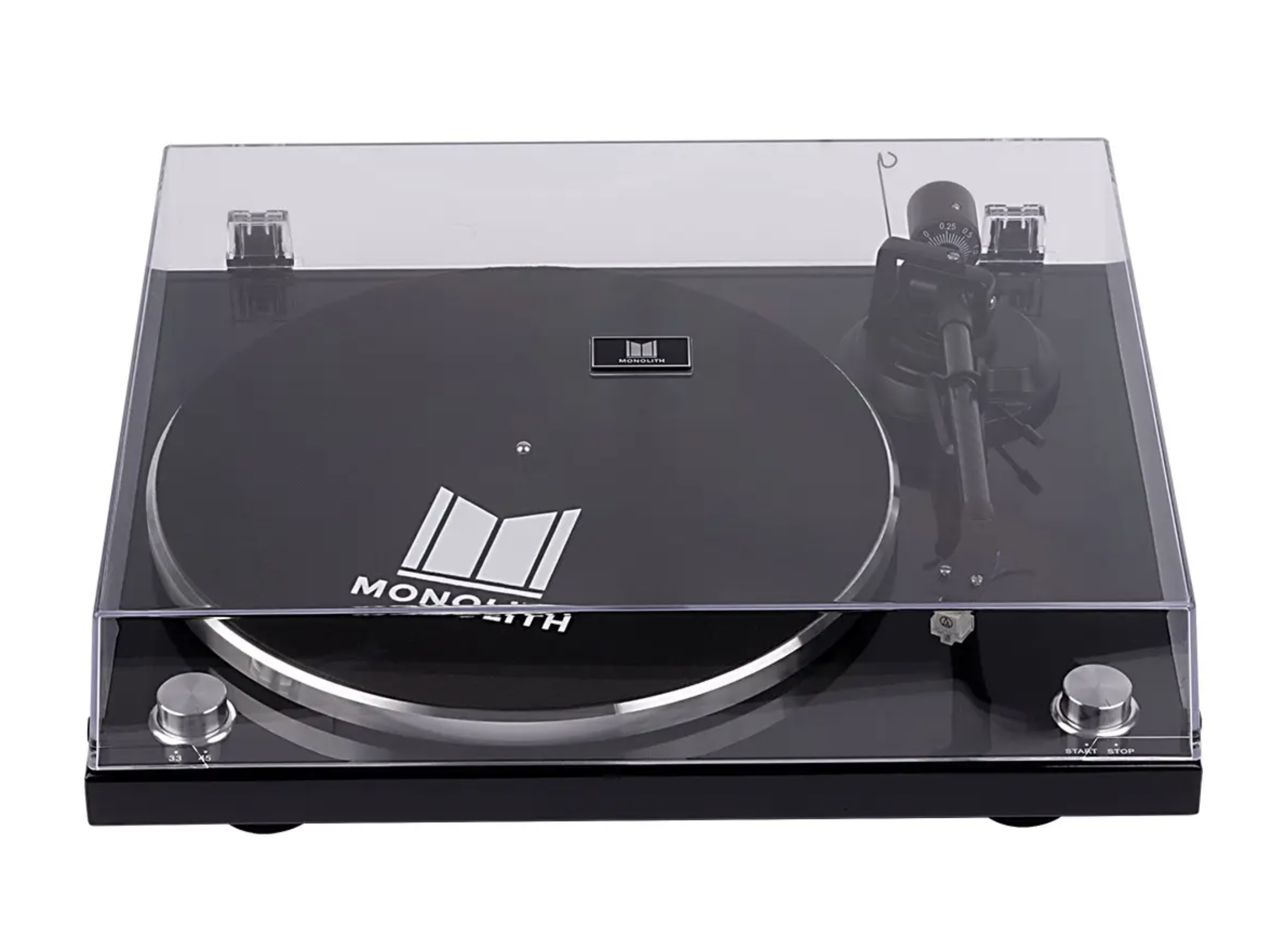

Collecting vinyl is an example of a hobby that, while once an affordable rite of passage for American youth, has become a much more exclusive affair.
Not only do modern 180-gram pressings cost significantly more than their equivalent compact discs—a quick search shows me that the new Blackbraid, for example, goes for $45 on record vs. $15 for the cd—but very good- to mint-condition copies of classic vinyl only continue to become scarcer and more sought-after.
Then, there’s the barrier of entry for a proper turntable, with the jump from a simple all-in-one suitcase record player to a higher fidelity component system easily being hundreds of dollars. And that’s not even taking into consideration the addition of an amplifier, shelf speakers, and all the other luxury doodads that make for a truly indulgent listening experience.
Thankfully, the growth in vinyl sales has motivated more and more manufacturers to get into the record player game. This includes venerable California online retailer Monoprice. Yes, that site that you historically went to for quality HDMI cables at cut-rate prices has added belt-driven turntables to its growing selection of consumer electronics.
More importantly, the quality and flexibility of its Monolith turntable make it a perfect point of entry for those who want to take their listening to the next level without breaking the proverbial bank.
Sexy Selling Points
The Monoprice Monolith—which, let’s be honest, sounds a bit like the title of a 1950s b-movie—splits the difference between luxury and frugality in a manner unlike that of other turntables. It eschews things like a variable-speed pitch slider and an auto-stop feature, instead focusing its core functionality on providing excellent audio fidelity on a budget.
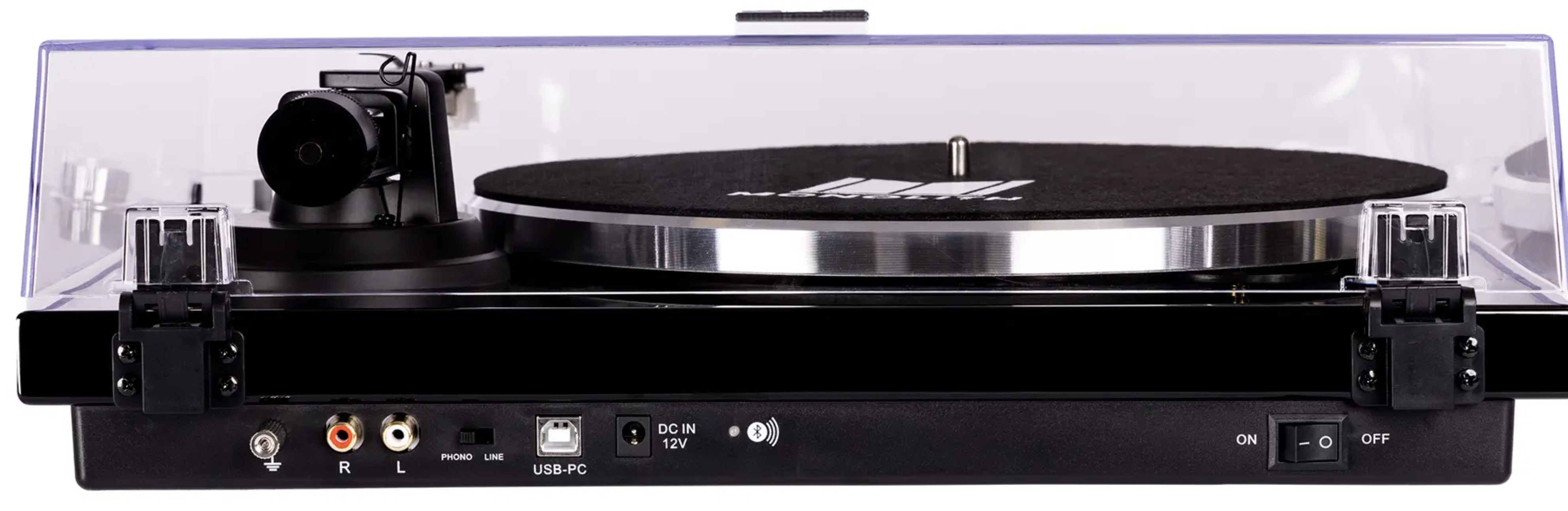
In addition to its exquisitely hefty platter, it includes a carbon fiber tonearm (complete with AT-VM95E cartridge), an adjustable counterweight, and an anti-skate weight. It also boasts traditional audio output (via stereo RCA), USB-B PC output for ripping your records to MP3, and Bluetooth connectivity.
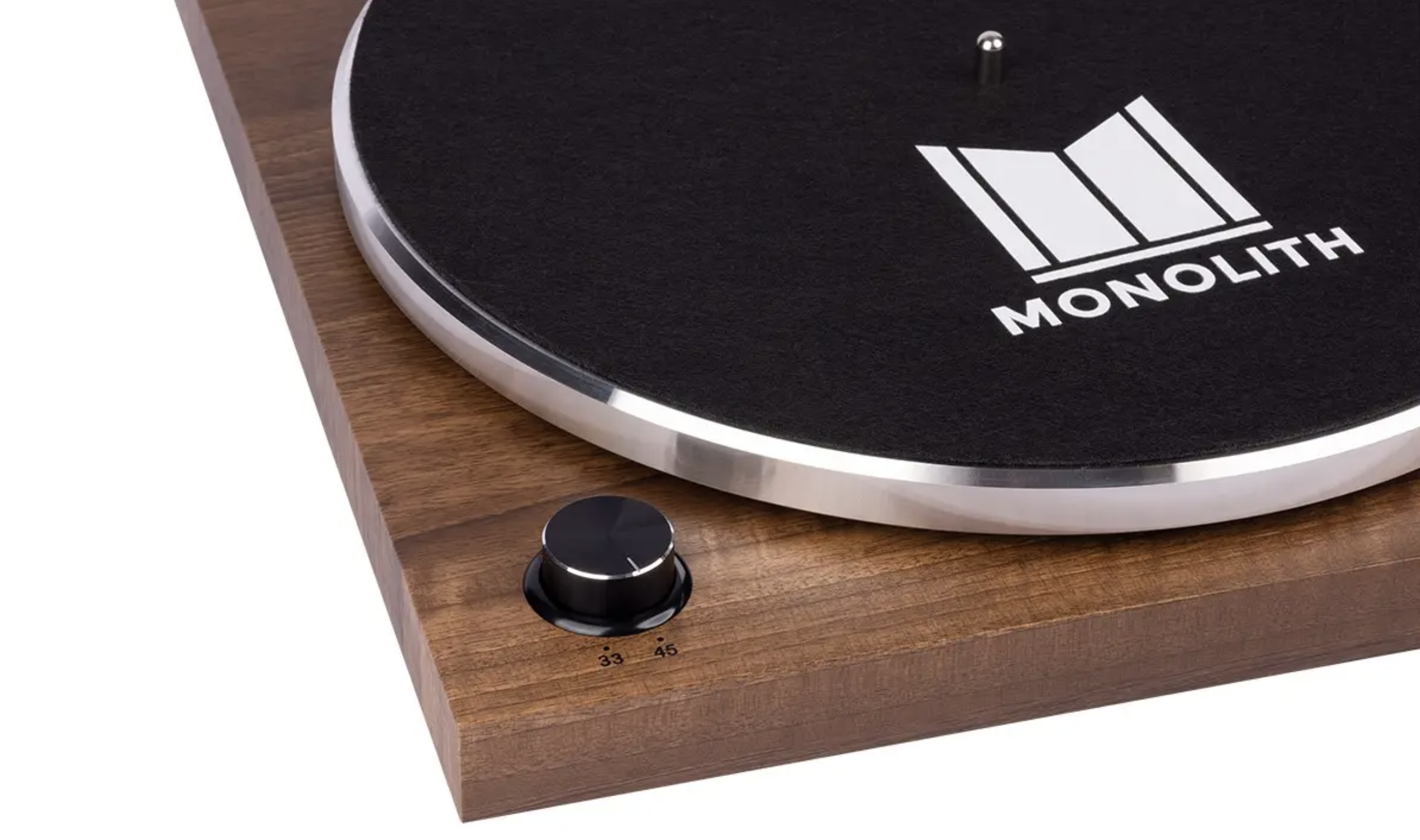
This means you don’t need a specialty setup to take advantage of the Monolith; you can easily connect to any Bluetooth speaker or plug right into an available RCA input. Hell, I slotted my review unit into the AUX input in the old 1990s stereo unit I keep in my office!
Visually, the Monolith is equally stunning. It’s available in both a glossy black and a classic woodgrain finish. Mine came in black, which does coordinate nicely with my other home electronics, but if you’re one of those people who simply can’t abide unsightly fingerprints on things, I’d direct you toward the wood model.
Setup
Riding the line between casual listeners and diehard enthusiasts, the Monolith does require some initial setup, though it’s far from extensive. The directions included in the user’s manual are so simple a child could do them. Of course, owing to the fact that I’m not a child but a middle-aged man who tends to gloss over instructions, I did run into a minor issue. (Obviously, this was all my fault, and we’ll discuss it in a minute.)
First and foremost, after unpacking the Monolith, you should attach the included lid to the two hinges on the back of the unit. It’s just a matter of lining up the pieces and giving the lid a solid whack to knock it securely into place. Next, you must place the platter on the central spindle and the belt on the motor pulley.
The platter has a single pass-through opening, and an obvious red ribbon is affixed to the belt so that, with one simple stretch, it easily attaches without any twisting or binding. Monoprice includes a slip mat, and once it’s in place atop the platter you’re halfway done.
The latter half of the setup does take a little time, and I urge you not to rush through it (like I did). First, adjust the tracking force but screwing the counterweight into the back of the tonearm. With the weight in place and the cartridge’s protective cap removed—yes, even this thin plastic cover can throw off the arm’s natural balance—position the tonearm in the empty space between the platter and the tonearm rest.

Next, rotate the counterweight by screwing/unscrewing it into the tonearm’s ribboned back end until the tonearm achieves a neutral position—this simply means balanced, tilting neither up nor down but smoothly returning to a horizontal position when disturbed. Once balance is achieved, return the tonearm to the tonearm rest, set the tracking force dial on the front of the counterweight to zero, aligning it with the black mark atop the tonearm, then unlock the tonearm and assure that it is still balanced.
Again, return the tonearm to the rest, and rotate the counterweight and its tracking force dial one full turn until the zero again aligns with the black indicator mark. You’ve now added 2.0g of tracking force to your tonearm, the recommended amount for the Audio-Technica VM95E cartridge that comes standard on the Monolith.
The tracking force represents the amount of weight pressing down on the cartridge as the platter spins the record beneath it, and using the proper amount of weight assures optimum sound while reducing wear on both the cartridge itself and your record collection.
With the track force set, the final step is to set the corresponding anti-skate force. Skating represents the tonearm’s tendency to glide inward as a record rotates. Properly setting up the anti-skate weight helps prevent skipping, jumping, and any related record damage.
Monoprice has already done the math for you, so it’s just a matter of making a small loop in the tiny microfilament attached to the weight itself, slipping that loop over the third groove in the anti-skating stub (located over the rear of the tonearm), and then feeding the filament through the adjacent wire hook so it hangs freely.

At this point, you’re ready to plug your Monolith in, connect to your speaker(s) of choice, and enjoy the music. Unless you’re me. I found that, rather than descend freely when I dropped the needle or slowly drift inward because of skating, my Monolith tonearm would drift outward, away from the spinning album and into the empty space between it and the tonearm rest.
After much head-scratching and many fruitless attempts at decreasing the anti-skate force, I finally realized that I had not properly seated the counterweight into the tonearm’s back end. After removing and reattaching it, resetting the tracking force, and rehanging the anti-skate weight, I was good to go… with only a little egg on my face.
Selecting Your Speakers
While sound quality can vary wildly from speaker to speaker, I was truly impressed by how much of a difference the Monolith turntable made all on its own. Sure, Bluetooth is the kind of thing record snobs turn their noses up at, but its inclusion is a real boon for those new to the hobby, and the Monolith offers an easy, stable connection. Just turn on the power switch and it will begin looking for nearby Bluetooth devices. The indicator light will begin to blink rapidly indicating pairing and will illuminate steadily when it’s fully paired.
For a physical speaker connection, just use a pair of stereo RCA cables (unfortunately not included). If you’re attaching to a line-in or auxiliary input, set the phono/line output switch to line and you’re good to go. If you’re using a phono level input to an external amplifier, though, set the output switch to phono, and connect both the RC inputs and the ground wire to the adjacent ground terminal.
Sweet Sounds
In addition to having a childhood record collection (a remnant of being born in the 1970s), I began collecting records in earnest as a teen in the ’90s. At that time, the media was all but dead, and you could scoop up vinyl by the armload from yard sales, flea markets, and record stores for peanuts. Of course, you were getting these products secondhand, so most were in far from pristine condition.
Anytime I use a new turntable, my first instinct is to bust out my oldest, crustiest vinyl. On low-end record players, any bit of dust or minor scratching becomes a major obstacle, upsetting the cartridge and sending the tonearm careening wildly.
Unsurprisingly, this was not the case with the Monolith. My well-worn copies of the Police’s Reggatta de Blanc (the sticker on it says it cost me two bucks) and the Violent Femmes 1983 self-titled record, both practically unplayable on my old suitcase turntables, sounded beautifully with minimal fuss.
The same goes for my beloved pressing of Ludacris’s Chicken-n-Beer. I scored this one from a local record store after a DJ downsized his collection, and while disc two is pristine, disc one has some serious wear. Again, it played perfectly, and the sound quality—even through my old Magnavox stereo speakers—was full and well-balanced.
Satisfied with how the Monoprice Monolith had handled so far, I moved on to my weirdo collection of singles. It was just a matter of twisting the two-position knob from 33 to 45, popping on the included adapter, and digging through the appropriate crate.
What I came out with was a bit of a curveball running from punk to funk, with the pièce de résistance being a pair of imports, music from the Space Battleship Yamato anime series. These are Columbia pressings (manufactured between 1974 and 1978), but they were produced in Japan. I’d long heard stories of the superiority of Japanese vinyl, how they were pressed in smaller batches with a more stringent level of quality control, and for the first time I felt like I could hear that in the crisp narration and evocative orchestration.
Now, it seemed unfair to just be playing ancient stuff on my fresh new turntable, so after I was fully satisfied concerning its competency with my golden oldies, I moved into some newer acquisitions. The low-end sludge of Red Fang’s 2021 Arrows (scooped up dirt cheap during Relapse Records’ holiday grab bag sale) came through with amazing separation, really finding that sweet spot between the thickly layered vocals and the instrumentation.
The same goes for the neo-classical bombast of Johto Legends (Music from Pokémon Gold & Silver), a Materia Collective/iam8bit production that I initially bought for the kids yet ended up finding its way into my regular workweek background music rotation. But perhaps nothing demonstrated the true utility of the Monolith than Daft Punk’s Tron: Legacy soundtrack.
While far from being my favorite Daft Punk release—and the only one I own purely in the LP format—playing it on this turntable was a totally different experience. The nuance in the production, the slow builds, and the delicate transitions, really came through… so much so that it made me rethink my opinion of the album as a whole.
The Bottom Line
I am not, by any stretch of the imagination, a vinyl purist. My top priority is always just listening to music in general, specialty formats be damned, and after that, I’m mostly about convenience. On any given day, I’ll stream a bit on Spotify while I get ready, listen to SiriusXM during my commute, and then play some records, CDs, and even cassettes at the office as my workload allows.
Not everyone wants a dedicated turntable, and certainly no one really needs one. But if you’re interested in vinyl—be it new stuff, classic releases, or even just some random records from your parents’ collection—the Monoprice Monolith represents a perfect solution for those just getting into the hobby and especially for those who want to make a big leap forward in their regular listening.
Monoprice has wisely chosen to focus on quality components where it counts and cut the fat where it can. The result is a wonderfully responsive turntable that performs optimally under normal conditions. If you want to expand your setup with a dedicated amp and boutique speakers later, you certainly can, but the Monolith also sounds great on its own just using the tech you already have.
Best of all, it does this for under $250. Wait, let me amend that—under $200. At the time of this writing, the Monolith is marked down from $249.99 to $199.99, which should further incentivize interested parties to pick one up.
And, yes, you can still buy a 99-cent HDMI cable while you’re at it.
A Monolith turntable was provided for the purposes of this review, but the manufacturer had no input into the content of this post.
Click through to read all of “The Monolith Belt-Driven Turntable Is an Easy First Step to a Better Listening Experience” at GeekDad.If you value content from GeekDad, please support us via Patreon or use this link to shop at Amazon. Thanks!

