
MoviePass, the movie subscription plan that expanded and then exploded rather spectacularly a few years ago, is back. But let me try and answer the question on everyone’s mind; is it worth it?
The MoviePass Backstory
For those that are unaware, MoviePass was originally founded in 2011 by Stacey Spikes. I don’t recall exactly when I first subscribed, but it was sometime in late 2012. when it first went nationwide. At the time, I paid $35/month to see unlimited movies. That was also about the time I started both obsessively tracking my movie watching in a spreadsheet, and also when I started seeing lots and lots of movies—I saw 51 movies in the theater in 2011, 97 in 2012, 122 in 2013, and over 100 a year ever since. MoviePass definitely played a part in that. It was 2015 before I added costs to my spreadsheet, but MoviePass saved me over $500 that year.
Of course, from the start, there were questions as to how sustainable the model was. MoviePass charged me $35 a month, but they paid the theater full price for every movie I saw. (So that $500+ I saved in 2015 came directly out of their coffers.) It was pretty clear back then that they wanted to operate on the gym membership model: have enough people who were paying and weren’t using the service to subsidize those, like me, who were. But unlike a gym, it’s easy to calculate exactly how much you were or were not using the service.
Things took a dramatic turn in 2016 when former Netflix executive Mitch Lowe became CEO. He dropped the price to a paltry $10 a month, which had the desired effect of causing a balloon in membership, which hit 3 million in June 2018. Lowe reportedly believed that he could work out deals with theater chains, including giants AMC, Regal, and Cinemark, to provide MoviePass with a discount considering the number of people the service was bringing into theaters. In 2017, Helios and Matheson Analytics, an investment firm, bought the company. They changed the plan from unlimited to one movie a day, but the company continued to (obviously) bleed money. Despite a host of further changes to the service, the new plans were simply unsustainable—the deals with the big chains never happened—and in late 2019, the service closed. Helios was driven to bankruptcy by the fiasco.
The timing was probably fortuitous—obviously, the company would never have weathered the year+ that theaters were closed due to the pandemic, but in November 2021, it was announced that the bankruptcy court had approved the sale of MoviePass (at this point, mostly just the IP) back to original founder Stacey Spikes, who announced that he was looking for a way to relaunch the service.
The Big Chain Memberships
Rather than make a deal to give MoviePass a discount on ticket prices, the three big chains took the idea of a subscription model and adopted their own.
AMC has the most aggressive plan. Its AMC Stubs A-List membership costs $22 a month in most places and $25 in bigger markets. That includes 3 free movies every week. Unlike every other program, that includes big-screen movies, IMAX, and even 3D. There are other benefits—cash-back awards on concessions, express lines, and the like—but the key piece is those 3 movies a week. Obviously, if you use the service at its maximum benefit, you can potentially see 12 movies a month for only $20, a mere $1.67 per movie. No other service comes anywhere close to that, and I can’t tell you how much I wish AMC was the dominant theater chain where I live. But, alas, the nearest AMC is over 2 hours away from me.
Cinemark, which operates Century Theaters (although they do seem to be increasingly rebranding as Cinemark), has its Movie Rewards program. For $9.99 a month, members receive one free movie credit each month. After that, they only pay $9.99 per ticket, which can include a companion ticket. At least in this area, that works out to a per-movie discount of around $4-5. Like AMC, there are other benefits, which are generally better than AMC’s, like a direct 20% discount on concessions. They also have a newer “Platinum” award tier that gives a steeper concession discount and the ability to purchase additional $9.99 tickets for friends, but it still only grants one “free” movie a month and has to be earned by seeing at least 8 movies over the course of a year. It’s a nice extra benefit for using the program that other chains don’t offer.
Regal’s Unlimited Plan is closer to AMC’s. Again, the cost varies by market, from $19 on the low end to $24 in bigger markets. But you do get truly unlimited movies. They have a smaller discount on concessions than Cinemark but more than AMC.
All of these plans generally restrict or outright exclude 3D movies and movies on the chain’s bigger screens, including IMAX, although there are exceptions.
MoviePass Redux
In September 2022, MoviePass opened applications to a new beta program. At first, it was rolled out slowly in a few markets, finally reaching 10 by the end of the year. And then, on January 24, 2023, they rather surprisingly opened the beta to everyone on the waiting list.
The new plans are credit-based. A basic plan costs $10 per month and gives a subscriber 34 credits. The standard plan is $20 for 72 credits, the premium plan gives 112 credits for $30, and a pro plan offers a whopping 640 credits for $40. The site does say that there is a limited quantity of these pro plans.
As of now (and the site does say, repeatedly, that all of these numbers are subject to change) a daytime (before 4 pm) weekday matinee movie costs 10 credits, and evening and weekend movies cost 15. So, the basic plan essentially allows you to see three daytime movies a month or 2 weeknight/weekend movies. The site’s FAQ does say that credits will carry over, up to a maximum of double the monthly allocation. So if I am reading that correctly, on the basic plan, you’ll end up with 4 extra credits each month. After three months, you’ll have enough extra “banked” credits for an additional weekday movie or an additional weekend movie every four months or so.
How Does MoviePass Work?

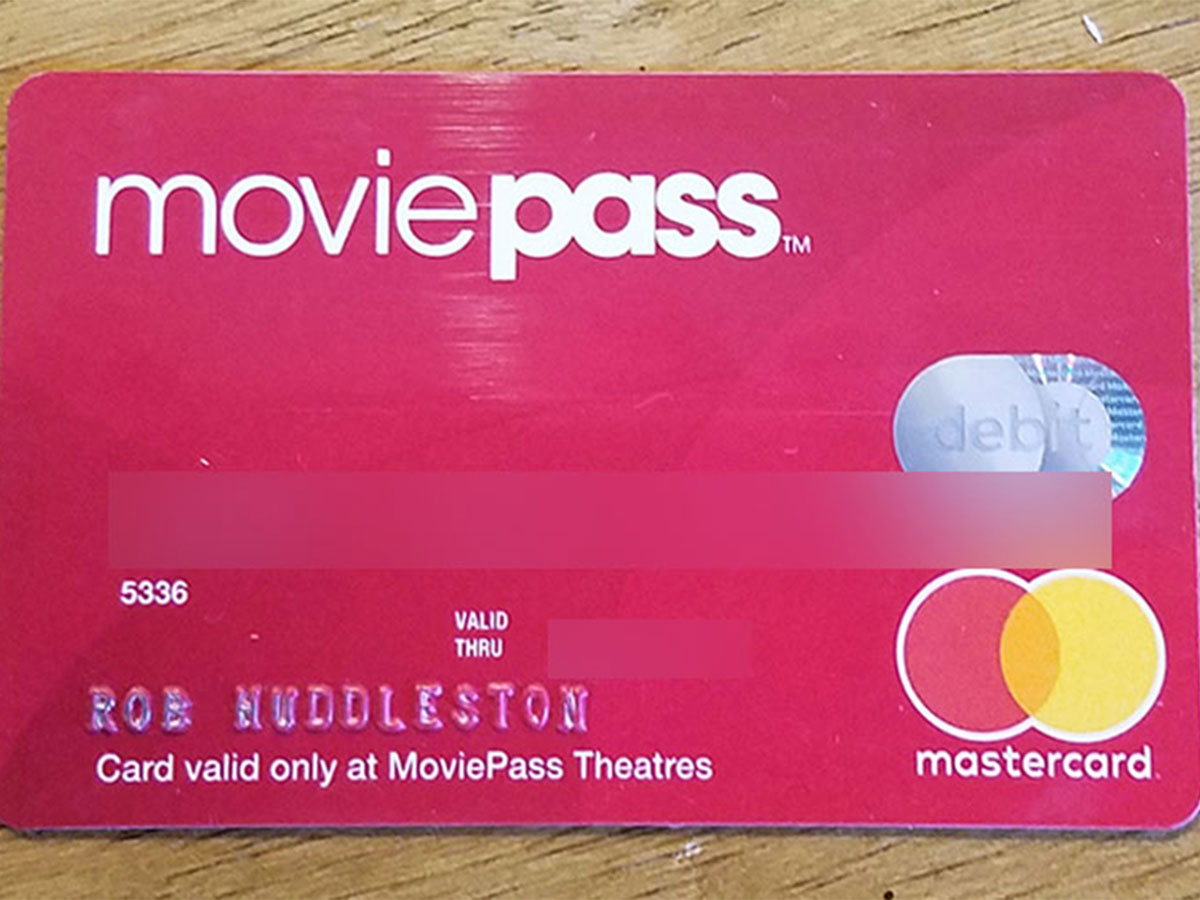
According to the website, the new MoviePass works just like the old MoviePass. You go to the theater—you have to be within a few yards of the theater for this to work—and you use the MoviePass app to “check-in” for a movie. When you join, you’re sent a special MoviePass debit card. When you check in for a movie, the company “activates” the card—basically, they put just enough to cover the ticket and taxes on it. You then go up to the box office or kiosk at the theater and use the card to buy the ticket.
There is an obvious downside to this process. Back in 2012, very few theaters had reserved seating and online ticket sales. Today, of course, almost all do. But MoviePass’ restrictions mean you cannot buy tickets in advance without physically being at the theater. Of course, you could go to the theater early and buy tickets if you’re worried they might sell out, but only to a certain extent. The website doesn’t say anything about this, but the old MoviePass did not let you purchase tickets for anything other than same-day tickets.
There is a workaround, but it’d be a hassle. You could, in theory, buy a seat in advance on the theater chain’s app (all three of the major programs waive online ticketing fees). Then, when you arrive at the theater, you could return that ticket (every theater that I’ve ever been to allows you to return an unused ticket up to the showtime for the movie) and then immediately rebuy that same seat with MoviePass. It’d be a hassle but would definitely be doable, and really the only solution for seeing a big, popular movie on opening night.
Who Should Join the New MoviePass?
First, obviously, none of these programs make sense if you aren’t seeing 3 or more movies in theaters each month.
Assuming that you aren’t also a member of one of the chain membership programs (more on that in a minute), then it absolutely makes sense to join MoviePass if you are seeing on average around one movie a week. And in fact, at that point, you will be saving a lot of money. Around here, weeknight/weekend movies cost about $14 on average. Two of those movies will cost $28, so the $10 basic MoviePass plan will save you something like 65%. And, of course, the more movies you see, the more savings you’ll get. If you go to the movies every Saturday night for a month, you’d spend $56, while the $20 standard plan would have covered all four of those movies, and you’d still have enough credits left over that month to see a fifth movie during the day.
What If I’m a Member of a Chain’s Program?
The math gets a lot trickier if you’re a member of one of the movie chain’s programs, assuming that the majority of the movies you see are at that chain.
MoviePass honestly doesn’t hold a candle to AMC’s program. Basically, the only way dropping A-List in favor of MoviePass makes sense is if you are only seeing 2-3 movies a month. Unfortunately, AMC’s other benefits—most importantly their anemic concession discount for members— aren’t enough to make up the difference. But as soon as you cross into thinking about a standard MoviePass membership—the $20/month one—A-List is the better deal by far.
Regal’s program is kind of the same. At 2-3 movies a month, you’re probably going to save money on a basic MoviePass membership, although, unlike AMC, Regal offers a real concession discount. If you buy a drink and popcorn when you go to the theater (and I always do), then the 10% discount at Regal might be enough to make up the difference and make their Unlimited plan worth it.
Cinemark’s Movie Club is the worse deal of the three. But because I live in a city dominated by Cinemark (there are two Regal theaters here, a small handful of independents, and then almost a dozen Cinemarks) it’s the one I’m the most familiar with. (I’ve been a Platinum member since they rolled out that program two years ago.) In reality, you don’t get any free movies with Cinemark. Every ticket you buy as a member is $9.99, which is also the cost of the monthly membership, so you are essentially pre-paying for one movie a month and then directly paying for the rest. It’s still a good discount, as tickets here range from $13.50-15.50, and that alone does end up meaning the membership pays for itself after only two or three movies each month (in which case I guess you could say that the included movie is free).
But given that, any MoviePass plan that gives you a number of credits that equals the number of movies you’re seeing at Cinemark will save you money. However, Cinemark has by far the best concession discount. It’s 20% for regular members and 25% for Platinum, and that alone saves me $5-10 dollars each visit. (I don’t track my concession purchases, but maybe I should.)
A combination of MoviePass and Cinemark is going to offer the most savings for Cinemark customers. As I said above, I see over 100 movies a year in theaters. That works out to a bit over 8 movies a month. The overwhelming majority of those movies are in Cinemark theaters. For the sake of the comparison, let’s just say that I’m going to see 84 movies in Cinemark theaters this year, or 7 a month. My $9.99 (I’m going to call it $10 to make the numbers nicer) covers the first movie that month. In order to cover 7 additional movies, I’d need to be on the premium $30/month plan. (I very rarely see movies during the day, so for the sake of these calculations I’m going to assume every movie I see will cost 15 credits.) Without any discount program, 8 movies a month would cost $112, assuming an average of about $14 each. With only the Cinemark Movie Club, they’d cost $80 ($10 for the “free” one with the membership, $10 each for the others). But with the Cinemark Club and the MoviePass Premium, I’d pay $40 ($10 for Cinemark, $30 for MoviePass). So that’s a 50% savings over Cinemark alone and a 65% savings over no plan. Combined with the concession discount from the Club, it’s easy to see that combining a MoviePass membership with the Cinemark club is an even better deal.
Independent Theaters
The one thing I haven’t addressed here is independent theaters. For these purposes, I’d include basically any theater that isn’t one of the big three chains. If you routinely see movies at those places, then of course MoviePass makes sense for you. And it’s the one place where combining it with Regal or AMC’s plans might make sense, as you could use MoviePass when you see things at other theaters and use the Regal or AMC plan when you go there.
But Will It Last This Time?
Of course, it’s impossible to tell. Spikes seemed to be keeping the company chugging along for years before Lowe and then Helios came in and blew it up, so there’s some hope. That said, the entire MoviePass business model is still built on losing money, so, at some point, they will still need to figure out another revenue stream beyond their subscribers. Some of the ideas I’ve heard batted around are terrible, such as forced watching of ads on the apps (where they use eye tracking to make sure you’re not looking away).
But the key difference for those who felt burned last time is this: they are not asking for a year upfront anymore. You can join at the tier that makes sense for how often you see movies, and you can cancel as soon as either it doesn’t make financial sense or they do something crazy to try to raise more money.
TL;DR
Pretty much, if you live somewhere that isn’t dominated by AMC or Regal, and you see 3 or more movies a month, then yes, MoviePass makes sense. But just do the math for yourself, based on how many movies you think you’ll see and what movies cost where you live. And since there’s no up-front commitment this time, there’s really nothing to lose either.
Click through to read all of “MoviePass Is Back. Is It Worth It?” at GeekDad.If you value content from GeekDad, please support us via Patreon or use this link to shop at Amazon. Thanks!