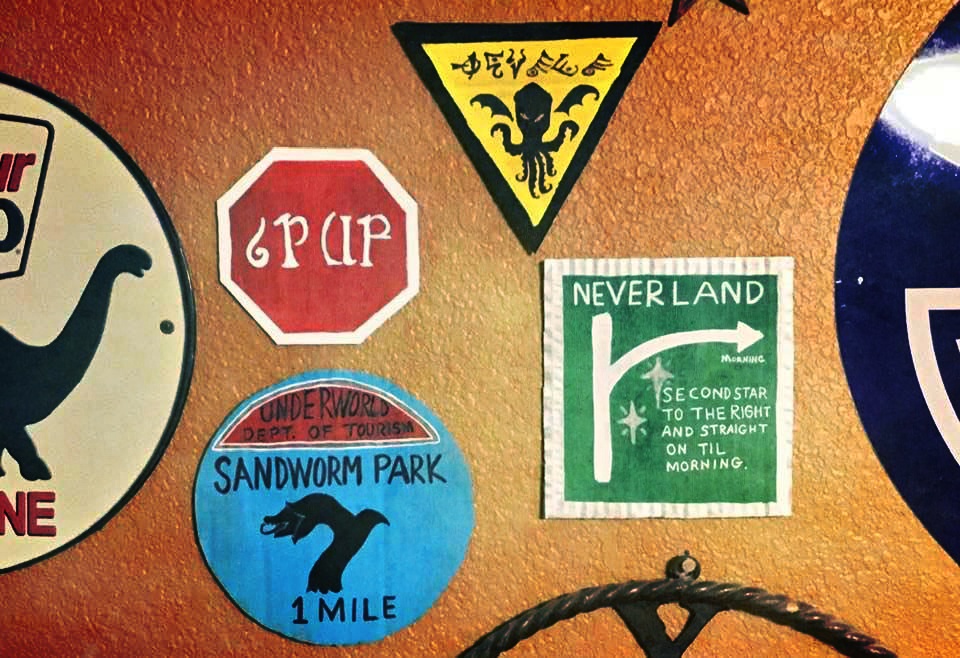
This summer’s Be the Artist 2020 concerns art created with a specific purpose in mind.
It may be difficult to believe the normal road signs we see every day have a design element to them, but they do. Everything from their color to their shape to the image is the result of a design decision being made.
First and foremost, road signs were invented out of necessity, as the introduction of automobiles to the already busy and dirty streets filled with horse-drawn vehicles and bicycles made things a little crazy. Not to mention, no one had drivers’ licenses yet. There needed to be some direction and order.
One of the first and most easily recognizable road signs is credited to a New England man, William Phelps Eno. Eno himself couldn’t drive but recognized the need for some sort of signage to keep roads a little safer, and in 1900 he wrote an article in a magazine called Rider and Driver saying there need to be stop signs at all intersections. However, he didn’t design it. The first stop signs were simple pieces of white sheet metal with black lettering.
According to a 2011 article in New York Times Magazine, the stop sign we know today was designed by the Mississippi Valley Association or State Highway departments in 1923, and their work on this design helped influence the design style of many other street signs to come.
For example, they felt a circle (having infinite sides) could easily mean “danger” such as the railroad crossing signs. The more boring and basic square or rectangle would simply convey information. The octagon also indicated warning, but a more specific one: STOP. It took these engineers until 1935 to come up with the color: yellow with black letters. The stop sign wasn’t changed to red (the color which now nearly universally means “stop”) until the mid-1950s and has remained pretty much unchanged until today.
As motor vehicle traffic became more prominent, and the highway system more complicated, more and more rules were needed to make sure everyone knew what they had to do and where to go. According to the Federal Highway Administration, there are more than 500 federally approved traffic signs in use today, indicating everything from livestock and pedestrian crossings to slippery roads and unstable mountains.
That’s a long way from the need for a simple stop sign to make sure horses and buggies didn’t collide with new-fangled motorcars.
So when you’re traveling to any destination, remember each sign took a little thinking to concoct, and even the stop sign took a few decades to complete. When you do, though, “Please Drive Safely.”
Four years ago we focused on pin-striping legend Kenny “Von Dutch” Howard in a “Be the Artist” post, and this project will also take advantage of upcycling cardboard for its foundation.
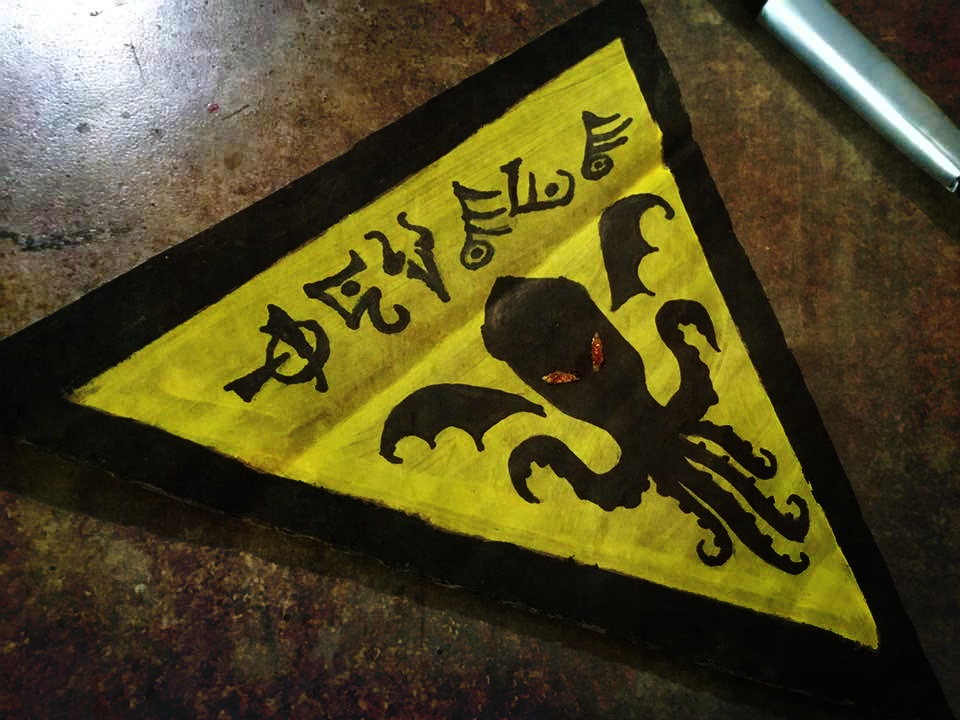
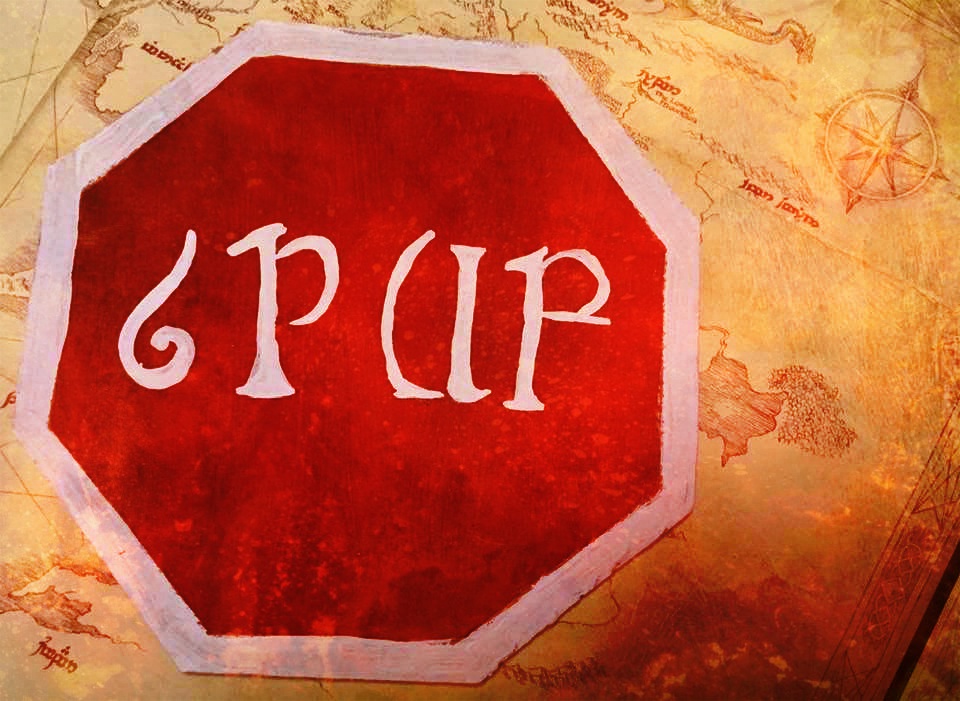
Find a piece of flat, corrugated cardboard big enough for the piece you want to make. It could be a miniature—about 5″ x 5″—or a full-size replica for the wall cut in a simple shape with the corners rounded off, such as common squares, rectangles, or triangles. If you want to make an eight-sided stop sign (easily done by cutting the corners evenly off a square), this would be a fun opportunity to play with fictional languages or alphabets such as Aurebesh or Klingon.
Once you’ve cut your shape, paint on the background color. Most all roadsides have a border (often black or white), and in order to keep it even, line the edges of the sign with masking or painter’s tape before painting the background. Since this is for a fictional place, you can make it any color you want, but there is an art behind choosing the right sign color. If you want it to mimic a real road sign, different parts of the world have their own set of colors. For example, in the United States, the main colors are as follows:
• Red or White: Regulatory such as “Stop,” “Do Not Enter,” “No Right Turn,” or a speed limit indication.
• Yellow or Orange: Warnings. Yellow signs indicate general warnings like stoplights up ahead or railroad crossings. Orange is often and indicators of hazards like construction.
• Blue, Green, and Brown: Guidance. Blue shows there are services up ahead, from gas stations to rest areas, and sometimes indicates highway numbers. Green shows directional information, and brown shows recreational information such as a state park in the area.
When you’ve finished painting, peel off the border of tape and (if needed) carefully fill it in with the desired border color.
Once you’ve picked your color, pick a topic. Is there a Bantha crossing up ahead or a Sandworm Hazard? If so, this can be indicated with a silhouette indicating the creature. If you’re coming up on “The Restaurant at the End of the Universe” or “Mos Isley,” let people know where and how far.
Most signs give a direction as simply as they can since the one seeing them should be able to interpret them, safely, while in motion. This is why the bold colors, simple outlines, large words or numbers, or symbols (such as arrows) are important.
Think about what the needs to say and how quickly it needs to be recognizable. As an added challenge, remember some star systems may have faster speed limits than others.
The fun part, as with many of these projects, is to get people to guess what planet or place. Some shapes, ships, and creatures may be recognizable to even those who aren’t fans of a certain series or movie.
Others might be a little more obscure—things that only “the real fans” will get. Either way, have fun with it and remember, even on other dimensions or planets we still need some guidance, whether or not there are actually highways.
Doc Brown may have bragged “Where we’re going we don’t need roads…” but he definitely needed directions to get there.
This post was last modified on August 15, 2020 3:54 pm
Trans rights are human rights. In a world where trans rights keep being taken away,…
I really didn’t want another story about a young adult attending a magical school, but…
Bring springtime and color into your home with Marimekko stationery items.
The fight between winter and the onset of spring is something we know well in…
Out today is the newest Mouse Guard book, 'Mouse Guard: Dawn of the Black Axe'—and…