ALMA (ESO/NAOJ/NRAO), Rivilla et al.; ESO/L. Calçada; ESA/Rosetta/NAVCAM; Mario Weigand, www.SkyTrip.de
One of the greatest mysteries of the Universe is how life happens. What conditions have to exist? What elements does life require, and are they the same everywhere?
How do you make life?
Scientists have been working to solve this mystery for as long as these questions have existed. And now, thanks to a team of astronomers using the Atacama Large Millimeter/submillimeter Array (ALMA) in conjunction with the Rosetta space probe, we might be closer to finding an answer–or at least, part of one.
Phosphorous is a vital element for life. Living things have phosphorous in their DNA (which contains our genetic code), as well as their cell membranes. Organisms also use phosphorous in ATP, the process in which they store energy. Where does this element originate? And how does it get to the point where it combines with other elements to create life?
As Carl Sagan famously said, “We’re made of star stuff.” Everything we are made of, indeed, that everything on our planet is made of, came from the stars. Phosphorous came from stars. We knew that much. But how did it get here?
The new research from the European Southern Observatory using ALMA shows that this phosphorous made its way to Earth (and other places that hold the building blocks of life) by way of the molecule phosphorous monoxide.
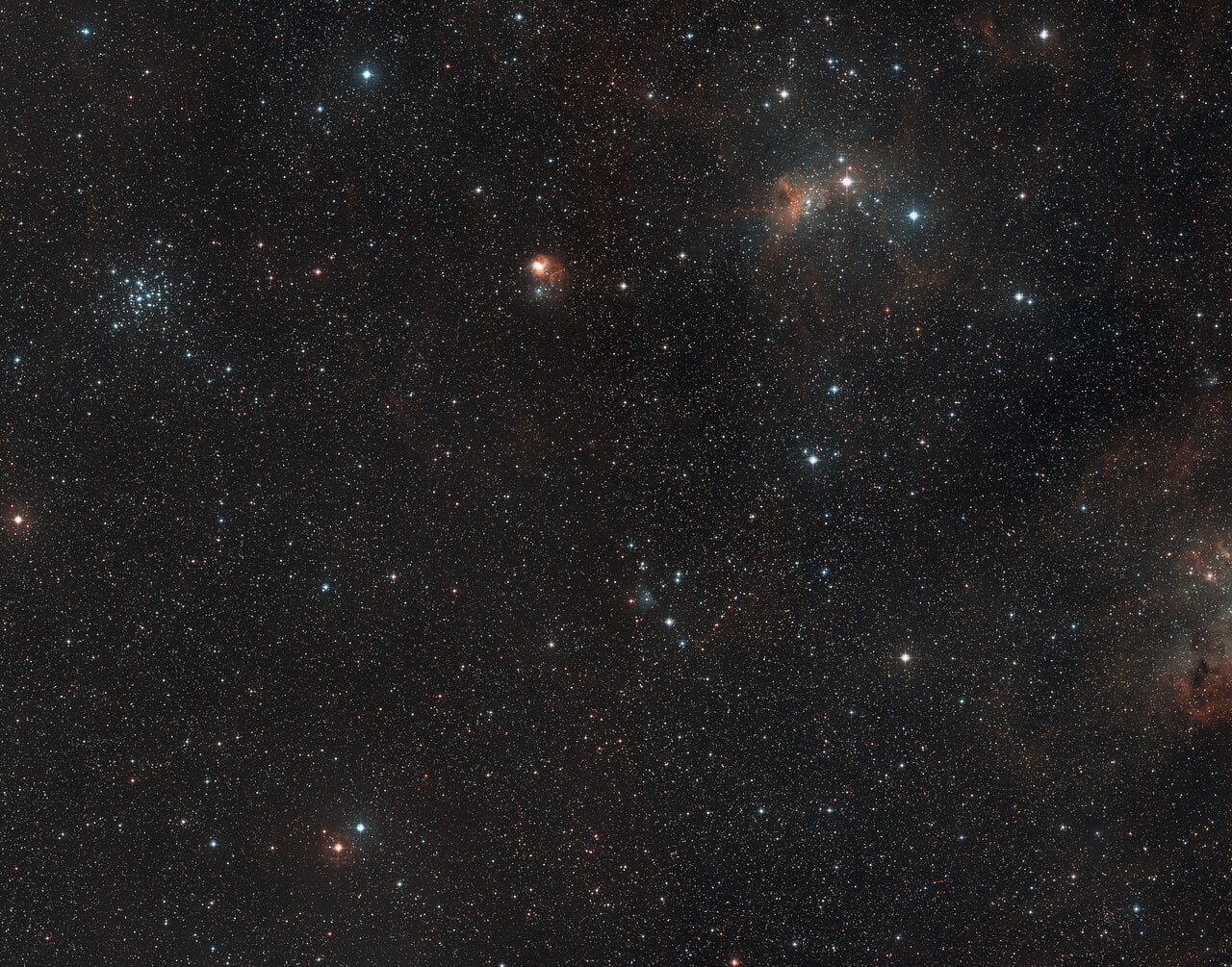
Astronomers used ALMA to look at a region of space where stars form, AFGL 5142. They looked at interstellar clouds where new stars and planetary systems come together from cosmic dust. By observing this area, scientists were able to see that molecules containing phosphorous are created as massive stars form. Gas flows from these big stars as they form, creating a cavity in the clouds of dust in space around them. Shocks and radiation from the baby star work together to form molecules containing phosphorus on the walls of these cavities. Astronomers observed that phosphorous monoxide is the most abundant of these phosphorus-containing molecules.
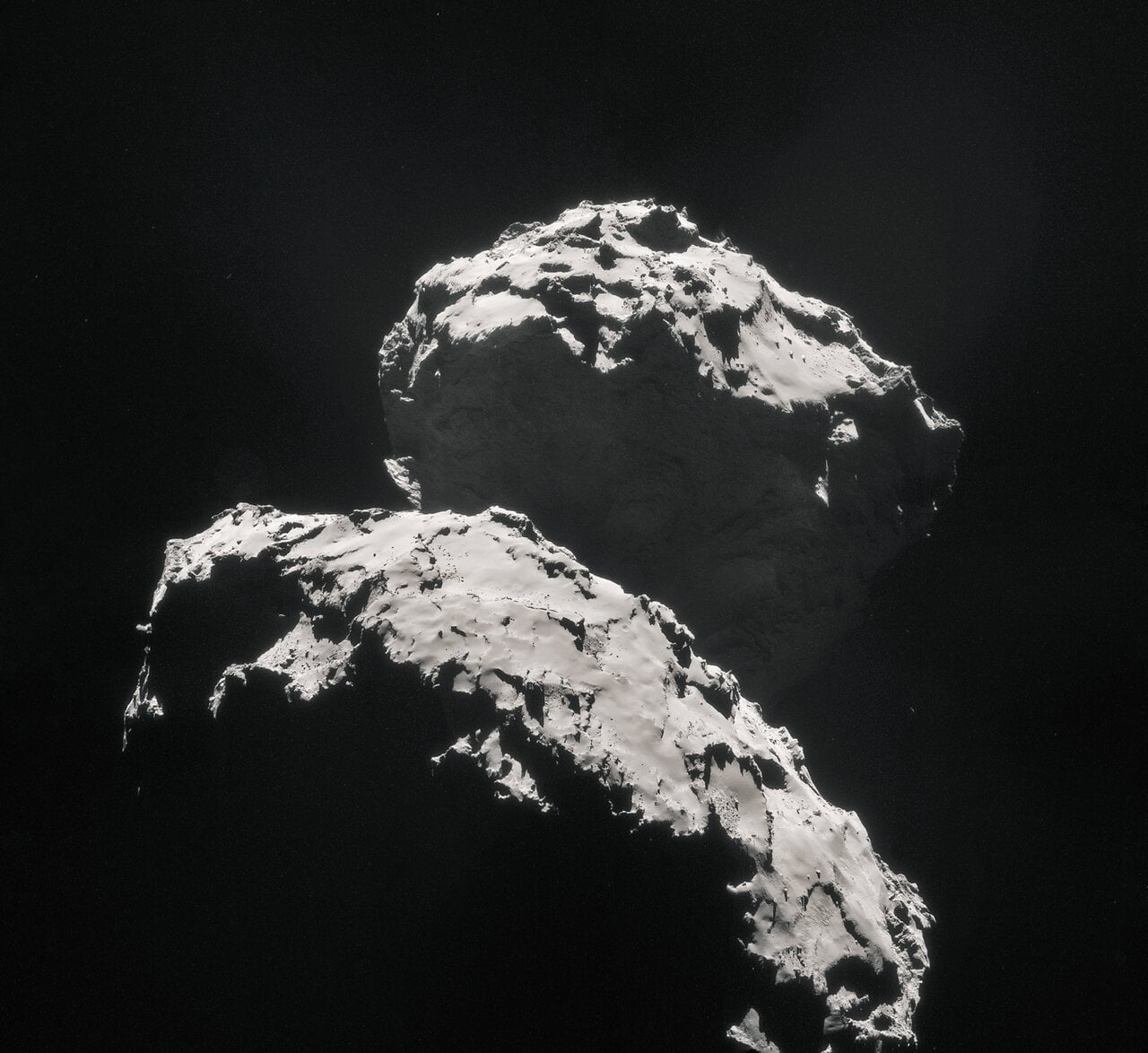
After scientists made this discovery, the team of astronomers began searching for a possible mechanism for transporting the phosphorous monoxide. They looked at a comet, 67P/Churyumov-Gerasimenko, because they suspected when the walls of the cavity around the forming star collapse to make the actual “mature” star, phosphorous monoxide can freeze out and get caught in dust grains. These dust grains collide and combine, forming pebbles, larger rocks, and then comets like 67P, which carry the phosphorous monoxide. Rosetta orbited the comet 67P for two years, collecting data with ROSINA (Rosetta Orbiter Spectrometer for Ion and Neutral Analysis).
Scientists had found evidence of phosphorous on the comet from older data, but now they had an idea of what exactly to look for. Sure enough, when they looked at new data, they saw that the comet did indeed contain phosphorous monoxide.
This is significant because we can now trace this building block of life all the way back to the beginning when they were formed. It’s only one small piece of the puzzle of life, of course, but having this knowledge could lead to other discoveries, making it possible to put more pieces together.
“Understanding our cosmic origins, including how common the chemical conditions favorable for the emergence of life are, is a major topic of modern astrophysics,” says Leonardo Testi, an astronomer at the European Southern Observatory and ALMA European Operations Manager. “While ESO and ALMA focus on the observations of molecules in distant young planetary systems, the direct exploration of the chemical inventory within our Solar System is made possible by ESA missions, like Rosetta.”
This post was last modified on January 14, 2020 7:59 pm
Trans rights are human rights. In a world where trans rights keep being taken away,…
I really didn’t want another story about a young adult attending a magical school, but…
Bring springtime and color into your home with Marimekko stationery items.
The fight between winter and the onset of spring is something we know well in…
Out today is the newest Mouse Guard book, 'Mouse Guard: Dawn of the Black Axe'—and…